Shipping Vehicles from China to the UK: A Guide for Manufacturers and Importers
3 Nov, 2026
Chinese manufacturers have become one of the fastest-growing forces in the UK new car market. For brands and importers bringing in hundreds or thousands of vehicles a month, the challenge isn’t one shipment. It’s building a repeatable supply chain that lands the right vehicles, in the right condition, at the right dealer, on schedule.
This guide sets out how the China–UK route works at volume, and where programmes most often lose time and money.
Origin and destination ports
Most export volume leaves from major Chinese vehicle terminals such as Shanghai, Tianjin, Guangzhou (Nansha), Shenzhen and Yantai. UK arrivals typically land at dedicated vehicle terminals including Portbury (Bristol), Southampton, Tilbury and Sheerness. Some services route via continental hubs such as Zeebrugge or Antwerp, with a short-sea feeder to the UK.
Port choice should follow your network, not habit. The right discharge port depends on where your compounds and dealers are, terminal capacity, and how quickly vehicles can clear and move inland.
Transit times and capacity
Deep-sea transit from China to the UK typically runs from around five to seven weeks, depending on the service, transhipment and whether vessels route via Suez or the Cape of Good Hope. Car-carrier capacity has tightened as Chinese exports have grown, so volume programmes need forward-booked space and a contingency plan for missed sailings.
Ontime’s vehicle shipping team books RoRo and container capacity to match your launch and replenishment plan.
Customs, duty and VAT
Vehicles entering Great Britain are declared through the Customs Declaration Service. For passenger cars from China, budget for the standard import duty (currently 10%) plus import VAT at 20%, which VAT-registered importers can usually recover. Customs warehousing can defer duty and VAT until vehicles leave bonded storage, which helps cash flow when stock arrives ahead of sales.
Accurate commodity codes, valuations and origin data matter. Errors at volume multiply quickly into delays and penalties.
Type approval and registration
Every model needs GB type approval, or recognised equivalent approval, before it can be registered. Vehicles must meet UK specification, including right-hand drive and mph instrumentation. Plan approval timelines into your launch, because a vessel that arrives before approval is complete means vehicles sitting in storage.
From quayside to dealer
Landing the vehicles is only half the job. Volume programmes need:
- Port clearance and damage inspection against agreed standards
- Storage and preparation at a distribution centre, holding stock for vessel windows, finance release or dealer demand
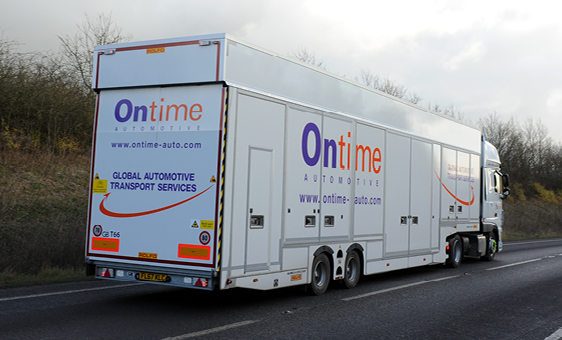
- Inland distribution by open or enclosed car transport for premium, pre-launch or press vehicles
- Visibility by VIN, vessel and order through Ontime’s Control Tower
Our finished vehicle distribution service connects each stage, so there’s one partner and one data set from Chinese port to UK forecourt.
Where China–UK programmes go wrong
- Booking shipping before type approval and registration plans are confirmed
- Choosing a discharge port far from compounds and dealers
- No buffer stock or storage plan for delayed or bunched sailings
- Separate providers for shipping, storage and road, with no single view of stock
Plan your route with us
Whether you’re launching a new brand or scaling an established one, our logistics consultancy team can model routes, ports and costs before you commit.
Talk to us about China–UK vehicle logistics.
Posted in
International Car Transport